How Small Inefficiencies Quietly Drain Thousands of Dollars from Commercial and Industrial Facilities Every Year
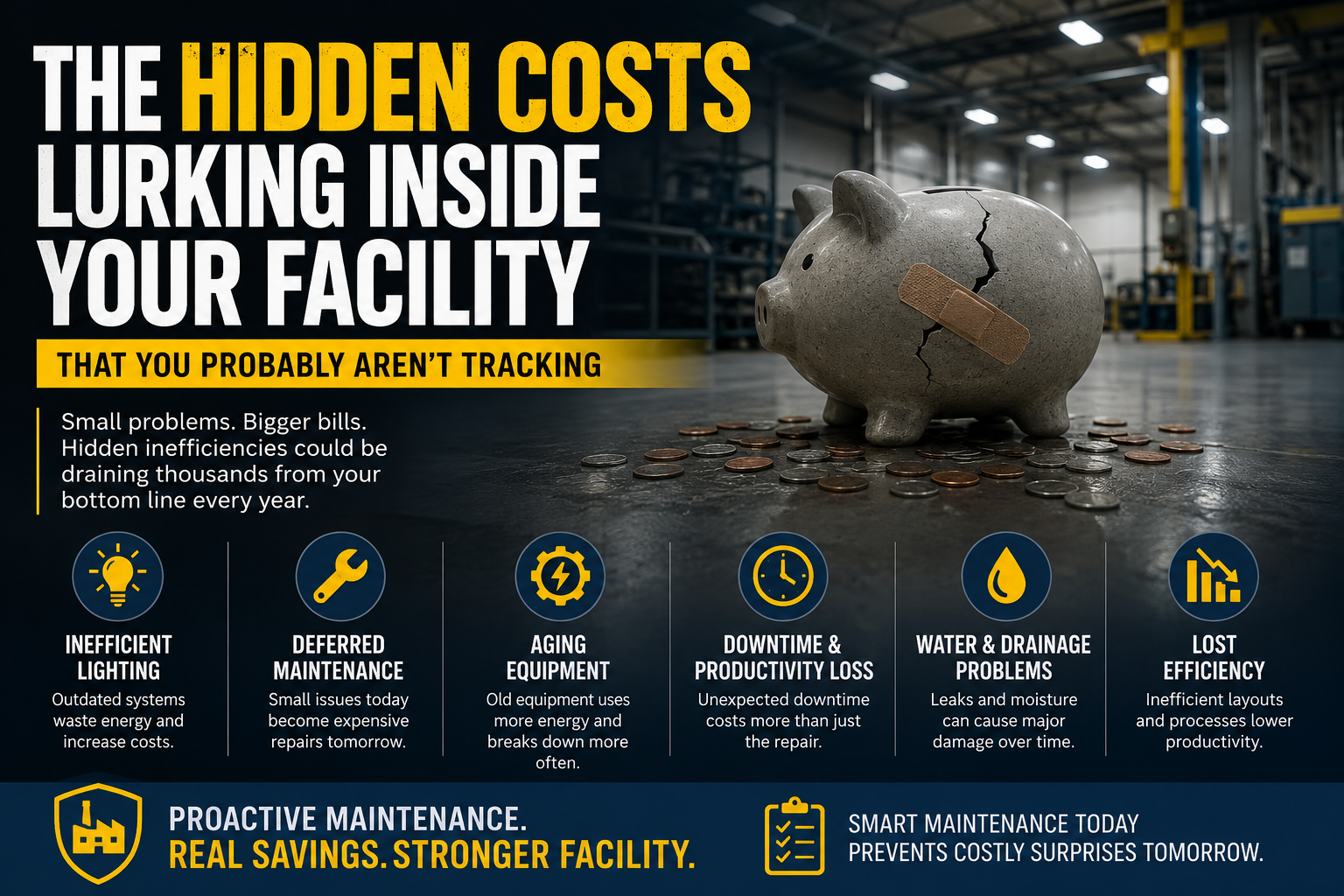
Most facility owners and managers pay close attention to obvious expenses such as payroll, utilities, equipment purchases, and maintenance contracts. However, some of the largest costs affecting commercial and industrial properties often go unnoticed because they accumulate gradually over time.
These hidden costs rarely show up as a single line item on a budget report. Instead, they appear as small inefficiencies that slowly reduce productivity, increase operating expenses, and shorten the lifespan of critical building systems.
The good news is that many of these hidden expenses can be identified and corrected before they become significant financial burdens.
1. Poor Lighting Efficiency
Lighting is one of the most overlooked operational expenses in commercial facilities.
Older fluorescent, metal halide, and high-pressure sodium fixtures consume significantly more energy than modern LED systems. In addition to higher utility costs, outdated lighting often creates darker workspaces, uneven illumination, and increased maintenance requirements.
Poor lighting can lead to:
- Reduced employee productivity
- Increased workplace accidents
- Higher energy consumption
- More frequent bulb replacements
- Increased maintenance labor costs
Many businesses are surprised to learn that a professional LED lighting upgrade can dramatically reduce operating costs while improving visibility and workplace safety.
2. Deferred Maintenance
It’s easy to postpone repairs when equipment appears to be functioning properly. Unfortunately, deferred maintenance often results in larger and more expensive problems later.
Small issues such as electrical hot spots, worn bearings, loose connections, damaged roofing materials, or HVAC inefficiencies rarely fix themselves. Over time, these problems typically worsen and lead to costly emergency repairs.
Preventive maintenance helps organizations:
- Extend equipment lifespan
- Reduce emergency service calls
- Improve reliability
- Lower overall maintenance costs
- Avoid unexpected downtime
3. Energy Waste from Aging Equipment
Older equipment often operates far below modern efficiency standards.
Many facilities continue using outdated electrical systems, HVAC equipment, motors, compressors, and controls because they still function. However, functioning equipment is not necessarily efficient equipment.
Even modest inefficiencies can add thousands of dollars annually to utility expenses.
Warning signs include:
- Increasing utility bills
- Frequent equipment cycling
- Excessive heat generation
- Inconsistent performance
- Rising repair costs
Regular facility assessments can help identify opportunities for energy savings that directly impact the bottom line.
4. Downtime and Productivity Loss
One hour of unexpected downtime can cost a business far more than most managers realize.
Whether caused by electrical failures, HVAC issues, equipment breakdowns, or lighting problems, disruptions can affect employees, production schedules, customer service, and revenue generation.
The hidden cost isn’t just the repair itself.
It includes:
- Lost labor hours
- Delayed production
- Missed deadlines
- Customer dissatisfaction
- Overtime expenses
Proactive facility management focuses on preventing downtime before it occurs.
5. Employee Comfort and Retention
Facility performance directly affects employee satisfaction.
Poor lighting, inconsistent temperatures, uncomfortable work environments, and recurring building issues can contribute to lower morale and reduced productivity.
Studies consistently show that employees perform better when they work in environments that are safe, comfortable, and well-maintained.
Investments in facility improvements often deliver benefits beyond energy savings and maintenance reductions. They can also support employee retention and overall workplace performance.
6. Water and Drainage Issues
Water intrusion and drainage problems are among the most expensive hidden threats to commercial properties.
Small leaks, poor grading, clogged drains, and moisture infiltration can lead to:
- Mold growth
- Structural deterioration
- Equipment damage
- Interior finish damage
- Increased insurance claims
Regular inspections can help identify potential issues before major repairs become necessary.
7. Inefficient Facility Layouts
As businesses grow, facility layouts often remain unchanged.
Over time, inefficient workflows, poor lighting placement, equipment positioning, and storage practices can reduce operational efficiency.
Small workflow improvements can significantly increase productivity while reducing labor costs and unnecessary movement throughout the facility.
The Bottom Line
The most expensive facility problems are often the ones that remain hidden.
Many organizations focus on managing visible expenses while overlooking inefficiencies that quietly impact profitability every day.
By taking a proactive approach to facility maintenance, energy management, lighting upgrades, and system inspections, businesses can uncover opportunities to reduce costs, improve safety, and increase operational performance.
The facilities that operate most efficiently are not necessarily the newest facilities. They are the ones that are consistently maintained, regularly evaluated, and strategically improved over time.
A facility should be more than a building. It should be an asset that supports productivity, profitability, and long-term success.
