Why Putting Off Small Repairs Today Can Lead to Big Expenses Tomorrow
In today’s competitive business environment, many companies are continually seeking ways to reduce operating expenses. Unfortunately, one of the first areas to get postponed is facility maintenance.
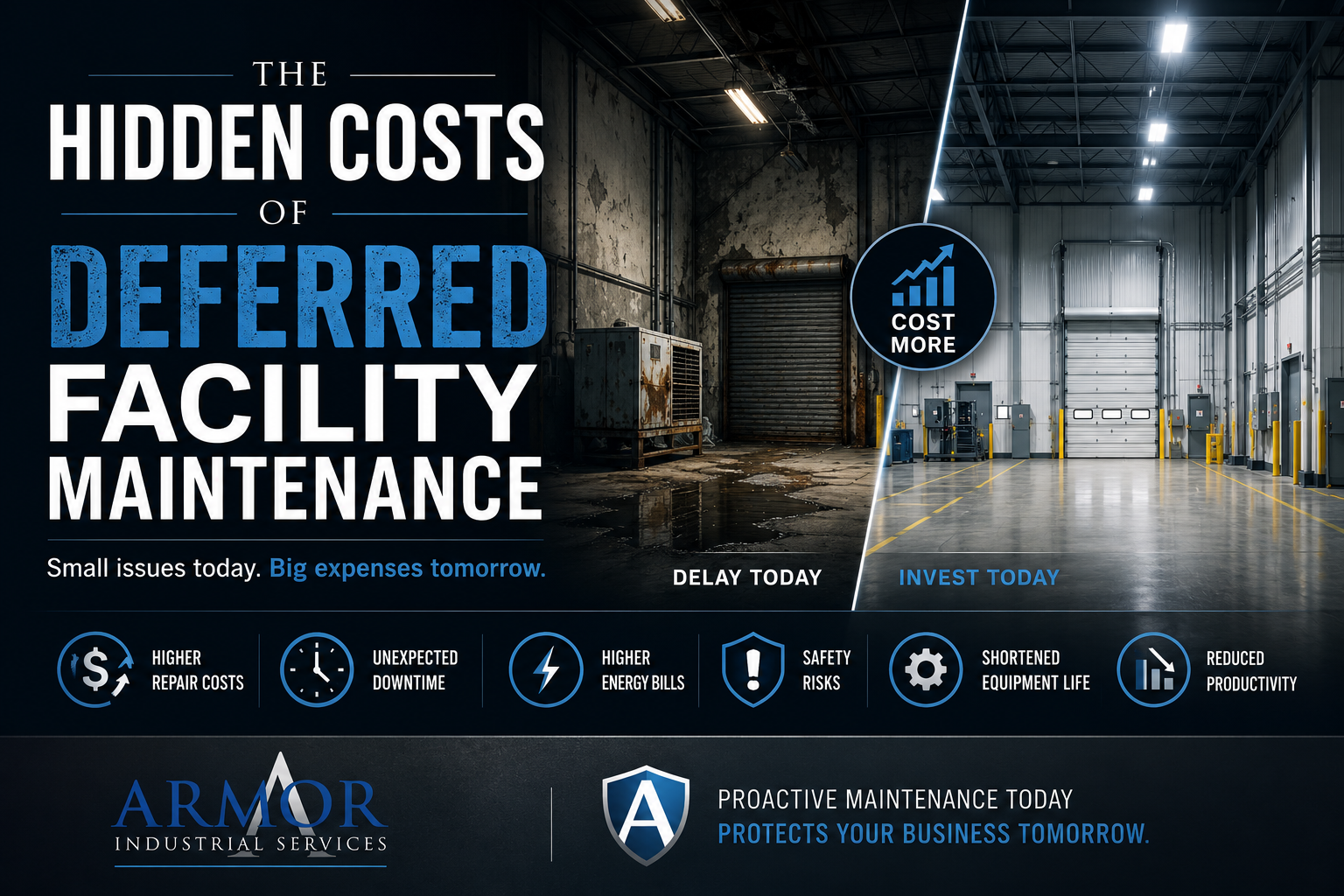
A flickering light fixture, a minor roof leak, an aging HVAC system, or a malfunctioning electrical panel may not seem urgent. However, delaying maintenance often creates a domino effect that leads to significantly higher costs down the road.
At Armor Industrial Services, we’ve seen firsthand how minor facility issues can quickly become major operational problems. The truth is simple: proactive maintenance is almost always less expensive than emergency repairs.
The True Cost of Deferred Maintenance
Deferred maintenance occurs when necessary repairs, upgrades, or routine maintenance activities are postponed due to budget concerns, staffing shortages, or operational demands.
While delaying maintenance may appear to save money in the short term, the long-term consequences can be costly.
Increased Emergency Repairs
Small issues rarely stay small.
A neglected electrical component can eventually fail and cause equipment downtime. A minor roof leak can lead to structural damage and mold issues. An HVAC system operating inefficiently can ultimately require complete replacement.
Emergency repairs often cost significantly more because they involve:
- Expedited service
- After-hours labor
- Production interruptions
- Temporary solutions
- Replacement of damaged equipment
Unexpected Downtime
For many businesses, downtime is one of the most expensive consequences of deferred maintenance.
When critical systems fail unexpectedly, operations may come to a complete stop.
Downtime can result in:
- Lost productivity
- Missed deadlines
- Delayed shipments
- Reduced customer satisfaction
- Lost revenue
A preventive maintenance program helps identify issues before they impact operations.
Higher Energy Costs
Aging equipment and outdated systems often consume more energy than necessary.
Common examples include:
- Inefficient lighting systems
- Aging HVAC equipment
- Electrical issues
- Worn mechanical components
Small inefficiencies can have a substantial impact on monthly utility expenses.
Upgrading systems and performing regular maintenance can significantly improve energy efficiency and reduce operating costs.
Shortened Equipment Lifespan
Equipment that is not properly maintained typically wears out faster.
Without routine inspections and maintenance:
- Motors work harder.
- Electrical systems overheat.
- HVAC systems become inefficient.
- Components fail prematurely.
Replacing major equipment is almost always more expensive than maintaining it.
Increased Safety Risks
Deferred maintenance can create serious safety hazards.
Examples include:
- Flickering or failing lighting
- Electrical hazards
- Damaged flooring
- Malfunctioning safety systems
- Poor visibility in work areas
Facility maintenance is not just about protecting equipment—it’s also about protecting employees and visitors.
Compliance Concerns
Many commercial and industrial facilities are required to meet various safety and building standards.
Neglected maintenance can potentially lead to:
- Failed inspections
- Compliance issues
- Increased liability
- Potential fines and penalties
Staying ahead of maintenance helps keep facilities operating safely and within regulatory requirements.
Damage to Your Company’s Reputation
Facility conditions influence how customers, vendors, and employees view your business.
A poorly maintained building can create impressions of:
- Disorganization
- Lack of professionalism
- Safety concerns
- Poor attention to detail
On the other hand, a clean, well-maintained facility demonstrates professionalism and pride in your operation.
The Benefits of Preventive Maintenance
A proactive maintenance strategy offers numerous advantages:
Lower Operating Costs
Preventive maintenance helps avoid expensive emergency repairs.
Reduced Downtime
Issues are identified and corrected before they interrupt operations.
Improved Energy Efficiency
Well-maintained systems operate more efficiently.
Longer Equipment Life
Routine maintenance helps maximize the lifespan of equipment and infrastructure.
Enhanced Safety
Properly functioning systems create a safer work environment.
Better Budget Planning
Preventive maintenance allows businesses to plan for repairs and upgrades instead of reacting to unexpected failures.
Building a Proactive Maintenance Plan
Every facility should have a maintenance strategy that includes:
- Routine inspections
- Electrical system evaluations
- Lighting assessments
- HVAC maintenance
- Building infrastructure reviews
- Equipment monitoring
- Scheduled upgrades and improvements
Investing in preventive maintenance today can save thousands of dollars tomorrow.
Don’t Let Small Problems Become Expensive Emergencies
Every facility experiences wear and tear over time. The difference between a minor repair and a major expense often comes down to one thing—how quickly the issue is addressed.
At Armor Industrial Services, we bring more than 30 years of experience in the commercial and industrial industries to every project. Our mission is simple: deliver services that create illuminating results for our clients.
From electrical services and LED lighting upgrades to mechanical systems and facility improvements, we help businesses maintain safe, efficient, and productive facilities.
If your facility has maintenance items that have been pushed to the back burner, now is the time to address them before they become costly emergencies.
Contact Armor Industrial Services today to schedule a facility assessment and discover how proactive maintenance can protect your investment and keep your operations running smoothly.
